
In modern high-rise buildings, elevators are essential for smooth vertical transportation. However, they are also among the most energy-consuming systems in commercial and residential structures. As sustainability becomes a major focus in architecture and urban development, energy-efficient elevator design is playing a critical role in reducing overall building power consumption.
Modern elevator systems are no longer designed only for speed and capacity. Today, architects, developers, and engineers focus heavily on building efficiency, smart power management, and sustainable vertical transportation solutions. Technologies such as regenerative drives, intelligent traffic management, and standby energy-saving systems are helping reduce operational costs while improving environmental performance.
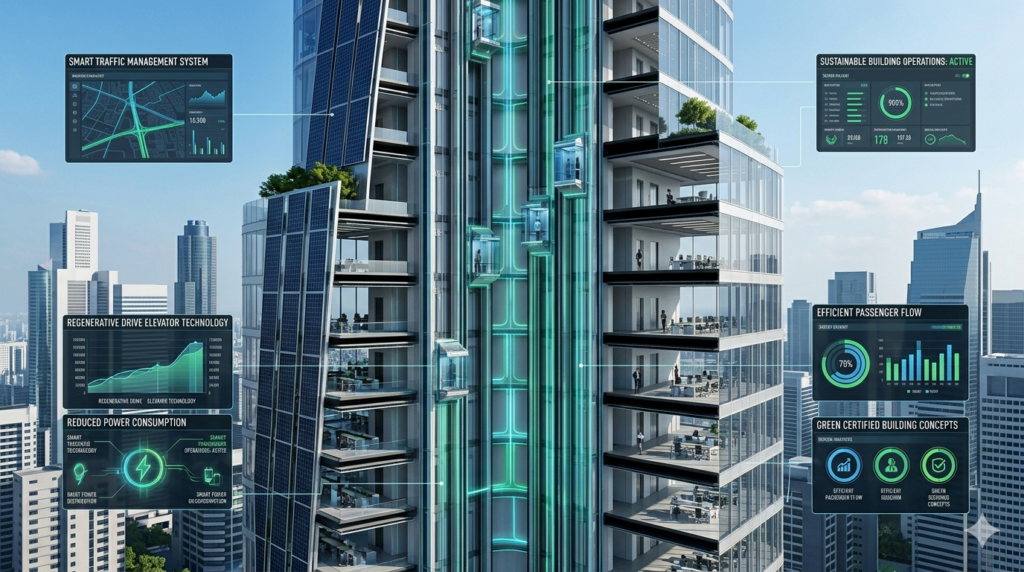
How Elevators Contribute to Building Energy Consumption
Elevators account for a noticeable portion of total energy usage in high-rise and commercial buildings. In large structures with continuous passenger movement, elevator systems operate throughout the day, consuming electricity for:
- Motors
- Lighting
- Ventilation systems
- Control systems
- Standby operations
Vertical transportation efficiency becomes especially important in buildings with:
- Heavy occupancy
- Multiple elevator banks
- High passenger traffic
- Long travel distances
Traditional elevator systems often waste energy during braking, idle time, and inefficient traffic handling. Poor elevator design can increase unnecessary power consumption and reduce overall building efficiency.
Several factors influence elevator energy usage, including:
- Elevator speed
- Load capacity
- Traffic frequency
- Shaft configuration
- Motor efficiency
- Building circulation design
Efficient elevator core planning and optimized traffic flow can reduce unnecessary trips and improve operational performance.
In many modern projects, developers now consider elevator systems as part of the overall sustainability strategy rather than treating them as isolated transportation units.
Regenerative Drives: Converting Motion into Energy Savings
One of the biggest advancements in energy-efficient elevator design is the use of regenerative drive technology.
Traditional elevator systems waste excess energy as heat during braking or downward movement. Regenerative drives capture this unused energy and convert it back into usable electricity.
For example:
- When an elevator travels downward with a heavy load
- Or moves upward with a lighter load
the motor acts as a generator, producing electricity instead of wasting energy.
This recovered energy can then be redirected to:
- Building lighting systems
- HVAC systems
- Other elevator operations
- Electrical grids within the building
Regenerative systems significantly improve building efficiency by reducing overall electricity demand.
Benefits of regenerative elevator systems include:
- Lower power consumption
- Reduced heat generation
- Lower cooling requirements
- Reduced operational costs
- Improved sustainability performance
In high-rise buildings with heavy elevator traffic, regenerative drives can create substantial long-term energy savings.
Modern elevator design increasingly incorporates regenerative technologies because they align with sustainable building practices and support environmental certifications.
Standby Modes and Smart Power Management Systems
Another major factor influencing energy efficiency is how elevators consume power during idle periods.
Elevators are often inactive for significant portions of the day, especially during off-peak hours. Without efficient standby systems, unnecessary energy continues to be consumed by:
- Cabin lighting
- Ventilation fans
- Display panels
- Control systems
Modern smart power management systems automatically reduce power usage when elevators are not actively operating.
Common energy-saving features include:
- Automatic lighting shutoff
- Sleep mode operation
- Smart ventilation control
- Sensor-based activation systems
- Energy-efficient LED lighting
These technologies improve vertical transportation efficiency while lowering electricity costs.
Advanced elevator control systems also use artificial intelligence and smart analytics to optimize elevator movement based on real-time traffic patterns. Instead of running elevators unnecessarily, the system intelligently distributes elevator usage to minimize energy waste.
This level of automation supports:
- Better passenger flow
- Reduced waiting times
- Lower operational energy consumption
- Improved building circulation design
As smart buildings become more common, intelligent elevator systems are becoming a standard component of sustainable infrastructure planning.
Impact of Traffic Patterns on Energy Usage
Elevator traffic patterns have a direct impact on energy consumption in commercial and residential towers.
Buildings experience different movement demands throughout the day:
- Morning rush hours
- Lunchtime traffic
- Evening exits
- Event-based occupancy spikes
Poorly managed elevator traffic increases unnecessary trips, idle movement, and power consumption.
Efficient elevator core planning and traffic management systems help reduce this issue by:
- Grouping passengers traveling to similar floors
- Reducing redundant trips
- Optimizing elevator dispatching
- Improving passenger distribution
Destination control systems are increasingly used in high-rise buildings to improve energy performance. These systems require users to select their destination before entering the elevator, allowing software to group passengers efficiently.
This improves:
- Travel speed
- Passenger convenience
- Vertical transportation efficiency
- Overall building efficiency
Traffic simulation software is also used during the design stage to predict movement patterns and optimize elevator placement, shaft design, and operational strategies.
By understanding user flow and building circulation design, developers can reduce energy waste while improving occupant experience.