
Elevators are essential for smooth vertical transportation in residential, commercial, and institutional buildings. However, like any mechanical system, elevator components wear out over time. As elevators age, they may experience frequent breakdowns, outdated technology, and reduced efficiency.
Building owners are often faced with an important decision: modernize the existing elevator system or replace it entirely. Understanding the lifecycle cost, operational benefits, and long-term performance of both options helps property owners make the right investment decision.
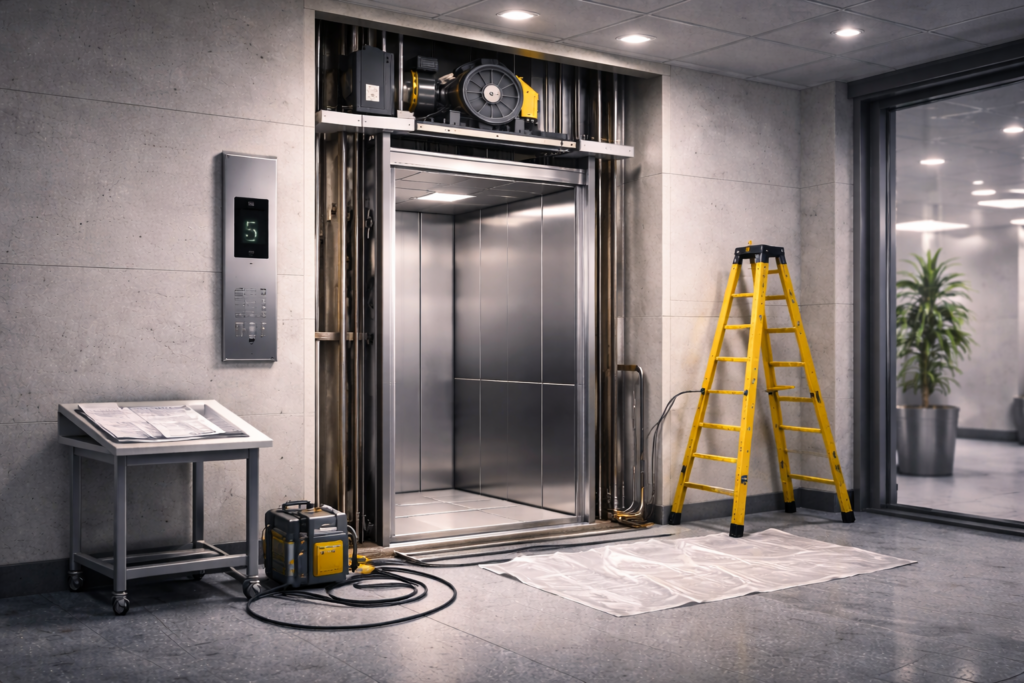
Signs Your Elevator System Needs Modernization
Most elevators operate efficiently for 20–30 years, but certain components may begin to deteriorate earlier. Identifying warning signs early can help prevent major failures and costly repairs.
Common indicators include:
- Frequent breakdowns and service interruptions that affect building operations
- Slow or jerky movement, often caused by aging motors or control systems
- Unusual noises or vibrations during operationIncreasing maintenance costs despite regular servicing
- Outdated control systems that lack modern efficiency and diagnostics
Older elevators may also lack modern safety features and may not comply with updated building regulations. Modernization helps restore reliability and improve system performance.
Components Upgraded During Elevator Modernization
Elevator modernization focuses on upgrading key mechanical and electrical components while keeping the existing structure intact. This approach improves performance without the high cost of installing a completely new system.
Typical upgrades include:
- Controller systems that improve traffic management and operational efficiency
- Variable frequency drives (VFDs) for smoother acceleration and reduced energy consumption
- Door operators and safety sensors for improved passenger safety
- Cabin interiors, including lighting, panels, and digital displays
- Communication systems, such as emergency intercoms and monitoring tools
These upgrades enhance ride comfort, increase reliability, and extend the elevator’s operational lifespan.
When Full Elevator Replacement Is Required
In some situations, modernization may not provide a long-term solution. Full elevator replacement becomes necessary when the system is extremely outdated or major structural components have deteriorated.
Replacement is often recommended when:
- The elevator is 30–40 years old or older
- Spare parts for existing equipment are no longer available
- Structural components or machinery are severely worn
- The elevator cannot meet modern safety or accessibility standards
A full replacement involves installing new machinery, controls, and safety systems. While the initial cost is higher, it provides a longer lifespan and improved performance.
Lifecycle Cost: Modernization vs Replacement
Modernization usually costs significantly less than full replacement and can extend an elevator’s lifespan by 10–20 years. It is a practical option when the elevator structure remains in good condition.
However, full replacement may offer better long-term value if the existing system is highly inefficient or outdated. A new system can reduce maintenance expenses, improve energy efficiency, and support modern building technologies.
When evaluating lifecycle costs, building owners should consider:
- Initial installation cost
- Ongoing maintenance expenses
- Energy consumption
- Downtime risks
- Compliance with safety regulations
Safety and Technology Improvements
Modern elevator systems incorporate advanced technology designed to improve both safety and efficiency. Features such as infrared door protection sensors, automatic rescue devices, and smart monitoring systems help prevent accidents and reduce operational risks.
Energy-efficient drives and regenerative technology can also reduce electricity consumption, making modern elevators more environmentally friendly and cost-effective.